
20/10/2026 - Press release
The risk of a repeat suicide attempt is particularly high during the three months following hospital admission for a suicide attempt, according to the results obtained within the SURVIVE project and published in The Lancet Regional Health Europe. The main risk factors are the patient's mental health conditions and history of suicidal behaviour. A high burden of psychotropic medication and experiences of emotional neglect during childhood also play a role. The researchers believe these findings should lead to a reassessment of the follow-up provided to people treated after a suicide attempt, as well as to a more precise identification of their risk factors.
14/10/2026 - General information
The International Society of Paediatric Oncology (SIOP) has awarded the Odile Schweisguth Award to research on Ewing sarcoma carried out by Dr Irene Cuervas, a researcher at the Hospital del Mar Research Institute and the Sant Joan de Déu Research Institute (IRSJD). The study was co-led by Dr Inmaculada Hernández-Muñoz, a researcher with the Dermatological Inflammatory and Neoplastic Diseases Research Group at HMRIB, and Dr Jaume Mora, head of the Sarcoma and Neuroblastoma Research Group at IRSJD, and was conducted in collaboration with the Centre for Genomic Regulation (CRG).
01/10/2026 - General information
Dr Sara Mederos, coordinator of the Neural Computation Laboratory at the Hospital del Mar Research Institute (HMRIB), is one of the researchers selected in the twelfth edition of the BBVA Foundation Leonardo Grants. Her project, 'Reorganization of Hippocampal-Prefrontal Learning Across Pregnancy', is one of 59 selected from nearly 1,900 proposals submitted. The project led by Dr Mederos aims to deepen our understanding of how neural circuits reorganise during pregnancy and the postpartum period. The research will focus on circuits involving the hippocampus and the prefrontal cortex, two brain regions that work together to build and update memories, guide decision-making and adapt behaviour to changes in the environment. The proposal was selected in the field of Biology and Medicine, one of the eleven areas covered by the Leonardo Grants.
Més informació "BBVA Foundation Leonardo Grant awarded to Dr Sara Mederos"
21/09/2026 - General information
Alzheimer's research has reached a pivotal moment. Advances made in recent years point towards a new era in the diagnosis and treatment of the disease, one of the leading causes of dementia worldwide, affecting more than 800,000 people in Spain alone. To examine where we are now and where the field is heading, The Lancet has published an in-depth Seminar article aimed at medical students and healthcare professionals who are not specialists in this area. Among the seven international experts selected to prepare the article is Dr Marc Suárez-Calvet, from the Barcelona Brain Health Center (BBHC) at Hospital del Mar, the Hospital del Mar Research Institute and the Barcelonaβeta Brain Research Center of the Pasqual Maragall Foundation. Below, he outlines the main conclusions.
Més informació "A new era in the history of Alzheimer's disease"
10/09/2026 - General information
The ReTune-AD project, led by Dr Manuel Valero, coordinator of the Neural Computation Laboratory at the Hospital del Mar Research Institute (HMRIB), in collaboration with Dr Javier Márquez-Ruiz from Pablo de Olavide University, has been selected to receive funding through the Pasqual Maragall Researchers Programme 2025, organised by the Pasqual Maragall Foundation. The research will receive up to €800,000 in funding to support its progress. The programme funds research projects of excellence focusing on Alzheimer's disease and other age-related neurodegenerative diseases.
Més informació "The Pasqual Maragall Foundation will fund a project led by Dr Manuel Valero"
04/09/2026 - Institutional news
The European Research Council (ERC) has selected a project led by Dr Sara Mederos, head of the Neural Computation Laboratory at the Hospital del Mar Research Institute (HMRIB), to receive an ERC Starting Grant worth almost €2.5 million. The review panel described her proposal as conceptually pioneering and well grounded.These grants are aimed at outstanding researchers with between two and seven years of postdoctoral experience. They usually provide €1.5 million in funding, with the possibility of requesting additional support, as in this case, to carry out high-level research projects.
Més informació "Sara Mederos receives an ERC Starting Grant"
27/07/2026 - General information
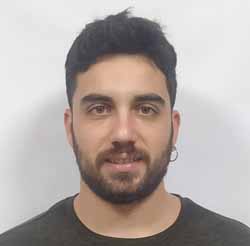
Pablo Abad, a postdoctoral researcher at the Neural Computation Laboratory of the Hospital del Mar Research Institute (HMRIB), has been awarded the Federico Olóriz Institute of Neurosciences Research Award by the University of Granada. The prize recognises a study published last year in the journal Science. The award includes a cash prize, and the recipient will be invited to deliver a lecture on the research. The award honours the best original research in basic or applied neuroscience published in a scientific journal during the three years preceding the call. Entries are evaluated according to the prestige of the journal in which the work is published, the extent of collaboration with national or international research groups, the study's potential future applications, and its originality.
22/07/2026 - General information
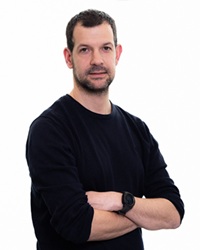
Dr Arnau Busquets, coordinator of the Cellular Mechanisms in Physiological and Pathological Behaviour Research Group at the Hospital del Mar Research Institute (HMRIB), has been elected to the Executive Committee of the European Brain and Behaviour Society (EBBS), the governing body of one of Europe's leading scientific societies dedicated to research on animal models and behaviour. The election took place on 21 May.
15/07/2026 - General information
Dr Sara Mederos and Dr Manuel Valero, coordinators of the Neural Computation Laboratory at the Hospital del Mar Research Institute (HMRIB), have been appointed as members of the first cohort of Young Ambassadors of the Spanish Society for Neuroscience (SENC). This distinction recognises outstanding early-career researchers in the field of neuroscience who have already demonstrated remarkable international achievements, scientific independence, and a strong commitment to strengthening the Spanish neuroscience community.
14/07/2026 - Press release
People who experienced traumatic events during childhood are 1.5 times more likely to develop physical illnesses than the general population. The association is strongest in cases of bullying, physical or sexual abuse, and parental loss or abandonment, according to a study led by the Hospital del Mar Research Institute that analyzed data from 250 published studies on the subject up to April 2025. The findings may help draw attention to the possible causes of a wide range of physical diseases and reinforce efforts to prevent childhood trauma
Més informació "Childhood Trauma Linked to Higher Risk of Developing Physical Disease"
© Institut Hospital del Mar
d'Investigacions MèdiquesLegal Notice and Privacy Policy | Cookie Policy | Site Index | Accessibility | Find Us | Contact