
24/11/2026 - Press release
Which patients who have undergone surgery for colon cancer need additional chemotherapy after surgery, and which do not? This was the question that the PEGASUS study, an international clinical trial promoted by the Fondazione Istituto di Oncologia Molecolare (IFOM) in Milan, Italy, sought to answer. The principal investigator in Spain is Dr Clara Montagut, Head of the Gastrointestinal Oncology Section of the Medical Oncology Department at Hospital del Mar and researcher at the Hospital del Mar Research Institute (HMRIB) and the Biomedical Research Networking Centre in Cancer (CIBERONC). The study's findings have been published in Nature Cancer.
The aim of PEGASUS was to determine whether liquid biopsy is a useful tool for identifying which patients should receive chemotherapy after colon cancer surgery and which should not. Current diagnostic tools do not allow this distinction to be made, meaning that all patients must undergo additional chemotherapy for three or six months after surgery. This chemotherapy, administered to reduce the risk of tumour recurrence, can cause side effects and toxicities that significantly affect patients' daily lives, such as neurotoxicity in the hands and feet, which can persist for years. For this reason, PEGASUS involved eleven centres in Italy and Spain, including Hospital del Mar and HMRIB, Vall d'Hebron Hospital, the Vall d'Hebron Institute of Oncology (VHIO), the Catalan Institute of Oncology (ICO)-Bellvitge Biomedical Research Institute (IDIBELL), and the INCLIVA Health Research Institute in Valencia, as well as CIBERONC.
"INCLIVA's participation in this trial has been very active, ranking as the third international centre in terms of patient recruitment, thanks to our centre's experience in the use of liquid biopsy, an area in which both Dr Noelia Tarazona, coordinator of INCLIVA's Cancer Area, and Dr Clara Montagut, from HMRIB, are recognised international leaders," explains Dr Andrés Cervantes, Scientific Director of INCLIVA.
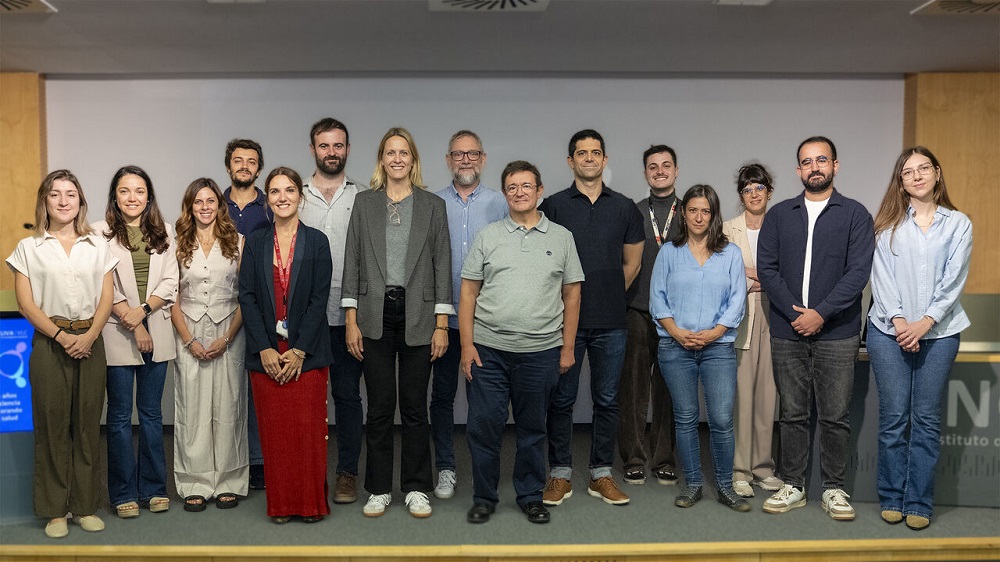
PEGASUS study team
The researchers used liquid biopsy to track the molecular traces of the tumour in the blood by detecting circulating tumour DNA in 135 patients who had undergone surgery for high-risk colon cancer. Patients who tested negative in the liquid biopsy test, meaning that no tumour DNA was detected in their blood, received less intensive chemotherapy. Conversely, those who tested positive, meaning that tumour DNA was detected in their blood, received more intensive chemotherapy. In addition, liquid biopsy was repeated twice more over the following months, allowing treatment to be adjusted according to the new results.
Positive liquid biopsy results in one in four patients
Among the study participants, approximately one in four patients, 35 out of 135, tested positive for circulating tumour DNA after surgery. In this group, disease-free survival was 62%, even with intensified chemotherapy. By contrast, 83% of patients with negative liquid biopsy results remained disease-free after three years, and 94% were alive, despite receiving less intensive treatment. A marked reduction in chemotherapy-related neurotoxicity was also observed. In light of these findings, Dr Montagut explains that "in patients with negative liquid biopsy results, we can begin to explore de-escalated treatment, whereas in those with positive results, simply intensifying chemotherapy is not enough. Reliably identifying residual disease is only the first step; we now need better pharmacological tools to eliminate it."
Repeating blood samples for liquid biopsy analysis during patient follow-up also helped to better personalise chemotherapy intensity. The researchers highlight that some tumour recurrences, particularly in the lungs, release very little DNA into the bloodstream and may remain undetected even with repeated testing. Transcriptomic analyses linked this phenomenon to a specific tumour cell subtype and stroma-rich tumour biology.
PEGASUS was primarily funded by the Italian Fondazione AIRC for Cancer Research through its 5x1000 programme, with additional support from Fondazione Oncologia Niguarda ETS. Guardant Health provided the liquid biopsy tests used in the study free of charge.
From PEGASUS to SAGITTARIUS
The next step is already underway through the randomised SAGITTARIUS clinical trial, funded by the European Union's Horizon Europe programme (Grant Agreement No. 101104657). It will include more than 900 patients in Italy, Spain and Germany. In patients with negative liquid biopsy results, indicating a low risk of recurrence, the study is testing a surveillance strategy based solely on serial liquid biopsies, compared with treatment chosen by the physician. In patients with positive results, standard chemotherapy is being compared with personalised treatments based on the tumour's genomic profile, including targeted therapies and immunotherapy. "With SAGITTARIUS, we are testing what PEGASUS taught us in a randomised trial on a much larger scale," explains Dr Montagut, Clinical Director of the SAGITTARIUS study.
Reference article
Marsoni S, Montagut C, Pietrantonio F, Sartore-Bianchi A, Lazzari L, Bergamo F, Zampino MG, Tarazona N, Mandalà M, Tamberi S, Elez E, Santos Vivas C, Luraghi P, Prisciandaro M, Tosi F, Ciardiello D, Vidal J, Seguì V, Palazzo M, Maddalena G, Bencardino K, Taglialatela I, Guix M, Rulli E, Vettore V, Morano F, Isella C, Crisafulli G, Patelli G, Medico E, Bardelli A, Cervantes A, Torri V, Tabernero J, Siena S, Lonardi S. Circulating tumor DNA-guided de-escalation or escalation of adjuvant therapy in high-risk stage II and stage III colon cancer: the phase 2 PEGASUS trial. Nat Cancer. 2026 Sep 14. doi: 10.1038/s43018-026-01237-9. Epub ahead of print. PMID: 42736431.
© Institut Hospital del Mar
d'Investigacions MèdiquesLegal Notice and Privacy Policy | Cookie Policy | Site Index | Accessibility | Find Us | Contact
